

Now that snow and ice have settled, we can analyse the impact that the Milano Cortina Winter Olympics had on the athletes. One of the direct consequences of these Games has been the transformation of medal winners into brand ambassadors. Many athletes started out as relative unknowns, but they left Italy with follower numbers that could potentially unlock multi-million-dollar deals. To get a clear picture of who benefited the most from these Olympics, we worked with Lefty to find out who increased their Instagram followers or generated the most value for their brands.
The most compelling narratives belong to those who arrived as outsiders and left as bona fide stars. Take Alysa Liu, the American figure skater who captured gold in both the individual and team events.
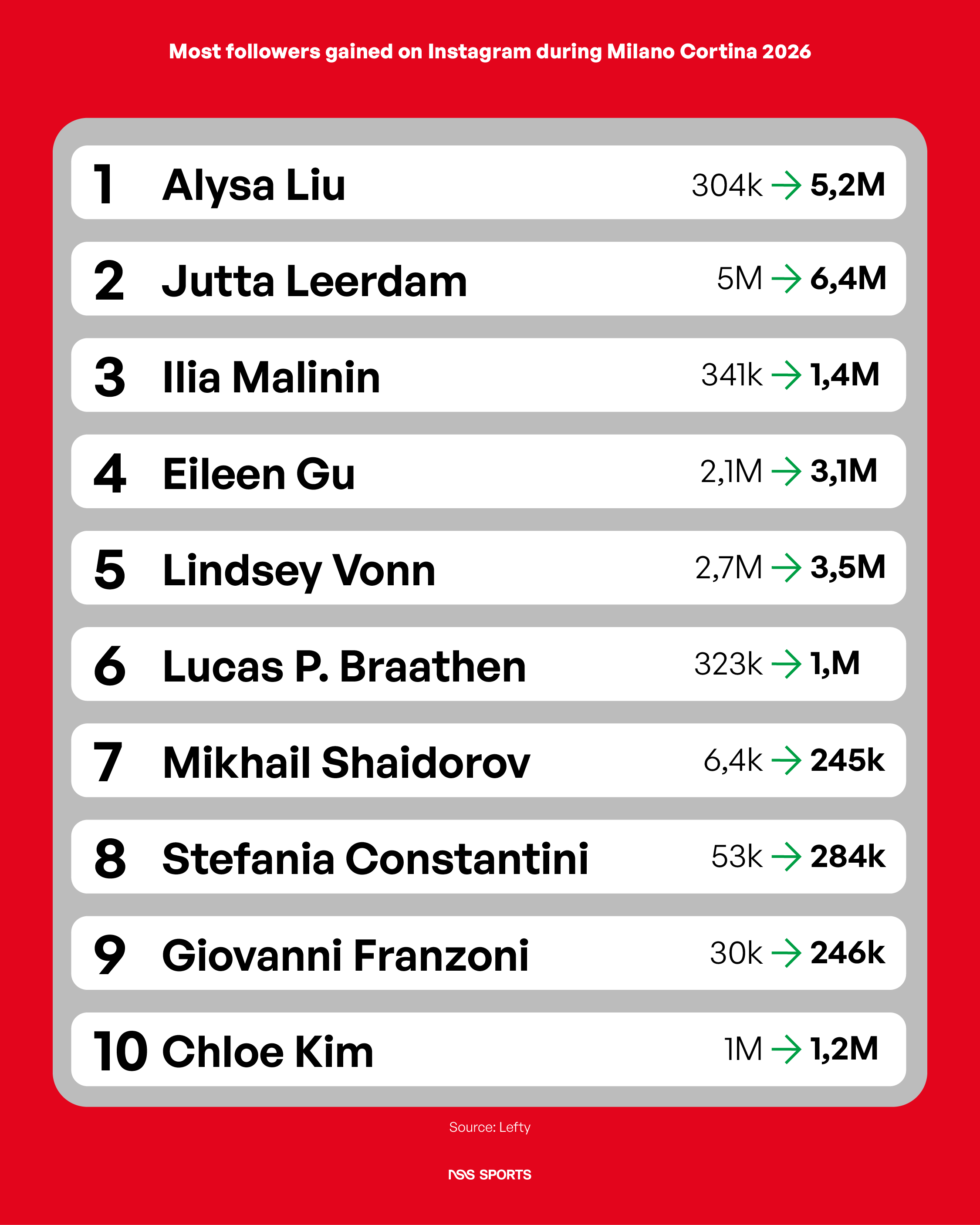
According to data collected by Lefty for nss sports, between February 1 and 24 her Instagram following surged from 304,065 to 5,217,705—an extraordinary 80.72% increase.
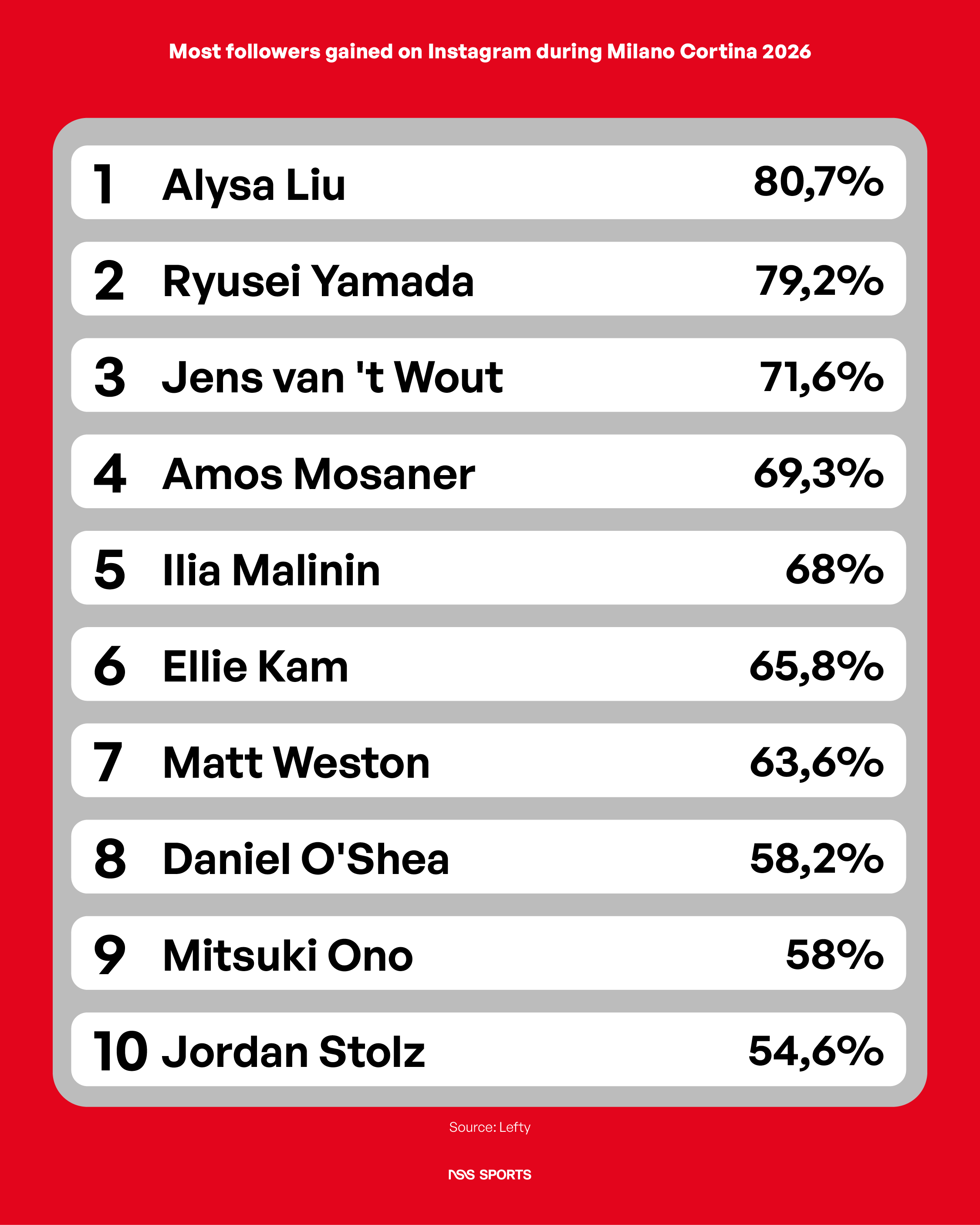
In Italy, a comparable rise was recorded by curler Amos Mosaner, whose Instagram following grew by 69.3%.
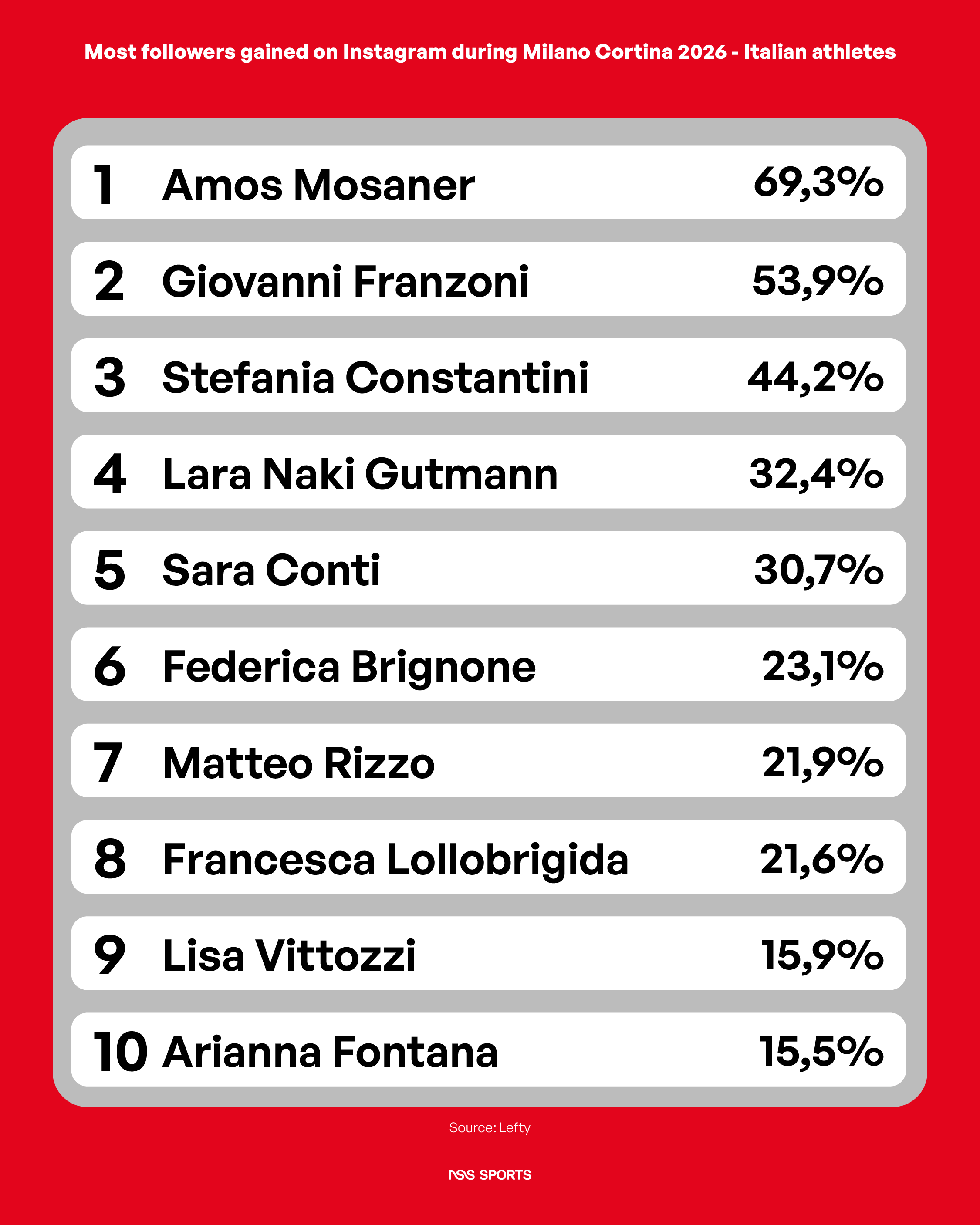
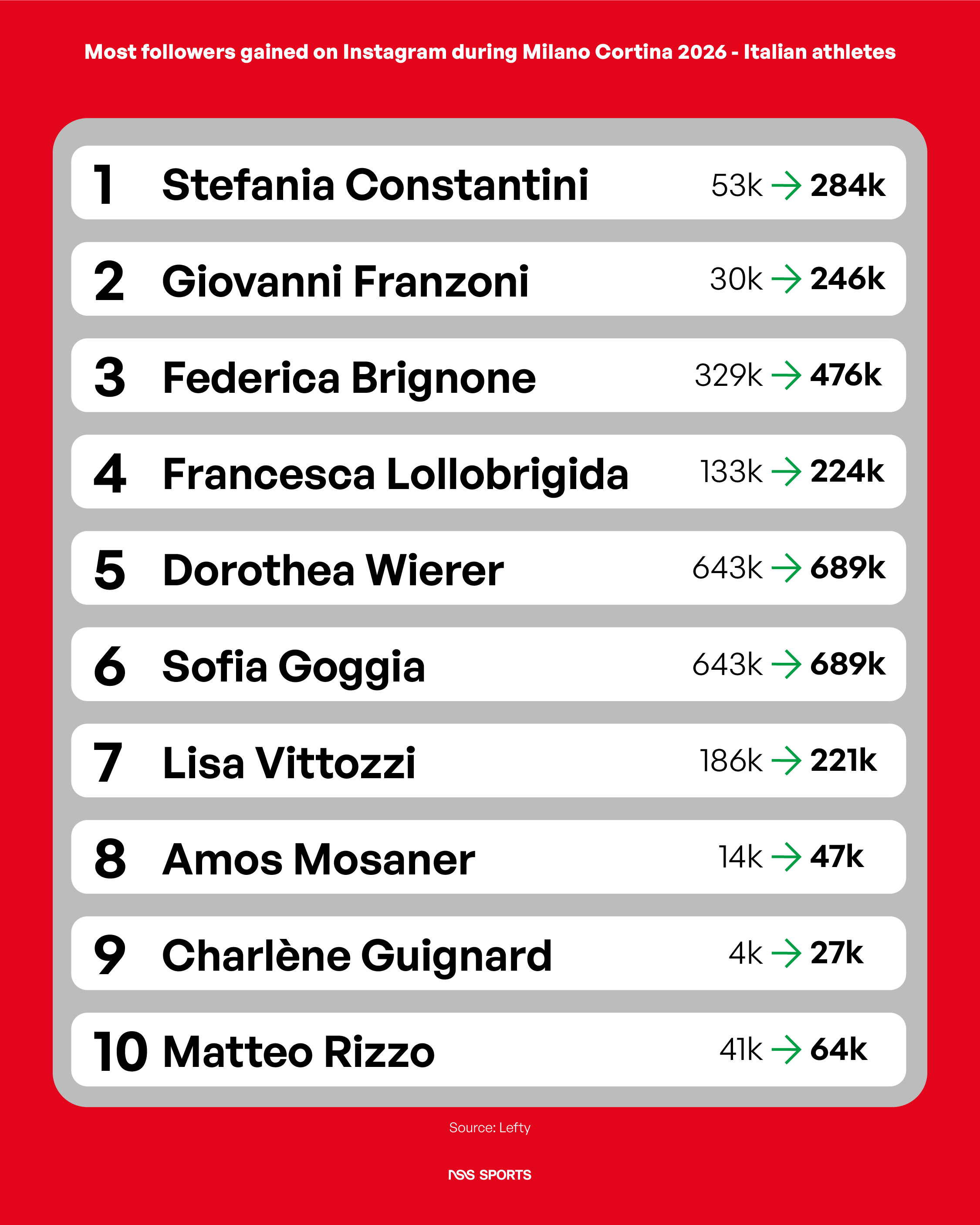
Curling has really taken off in Italy, as evidenced by the fact that Stefania Constantini, who won the bronze medal in mixed doubles with Amos Mosaner, gained more Instagram followers than any other Italian athlete during the Milano Cortina Games.
Numbers alone, however, mean little unless translated into commercial impact. In this category, Ilia Malinin reigns supreme. The “Quad God” not only delivered a spectacle on the ice but also generated remarkable visibility for his sponsors. According to Lefty’s data, Malinin was the medal-winning athlete who produced the highest Earned Media Value (EMV): $1,941,251.
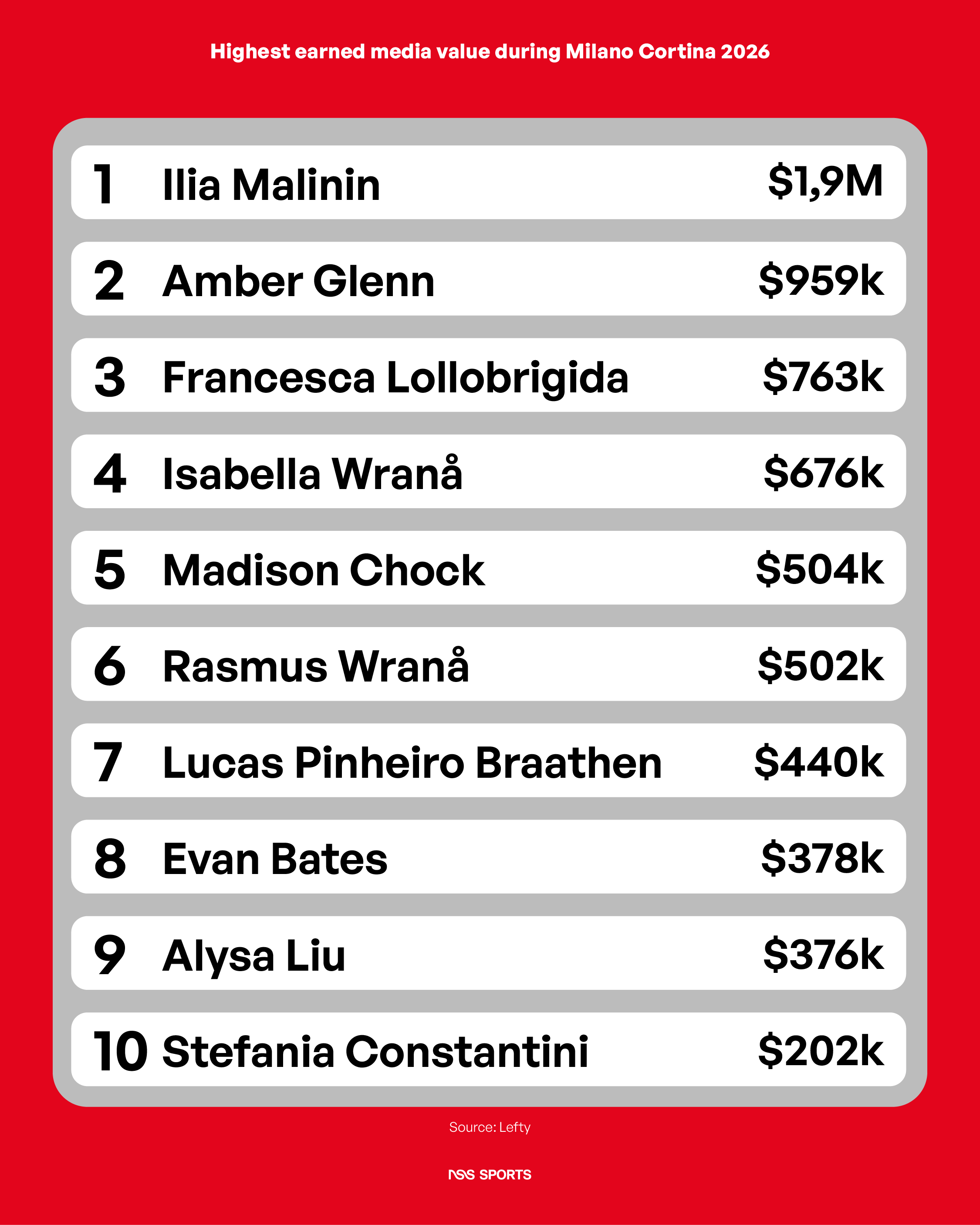
EMV represents the estimated cost of achieving equivalent reach through paid advertising and the estimated monetary value of organic exposure a brand receives through athlete-generated content. The larger and more successful the athlete, the greater the traffic their posts can drive.
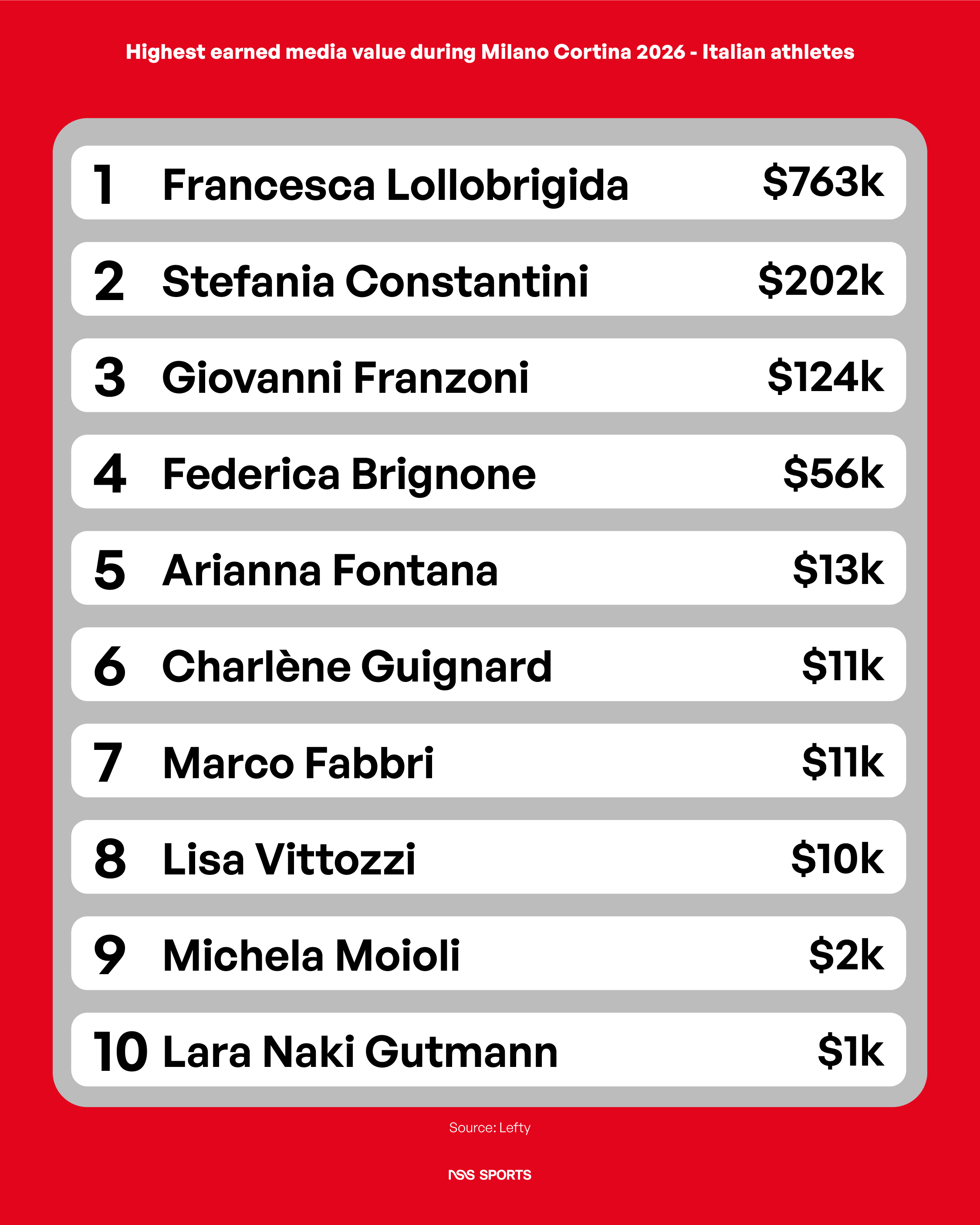
It is worth taking a closer look at Team Italy. You might think that Federica Brignone, the gold medallist in the giant slalom and super-G, or Arianna Fontana, the most successful Italian Winter Olympian, generated the highest EMV among Italian athletes, but that’s not the case. On the podium, we find Francesca Lollobrigida, who won gold in the 3,000 m and 5,000 m speed skating events; together with Stefania Constantini; and Giovanni Franzoni.
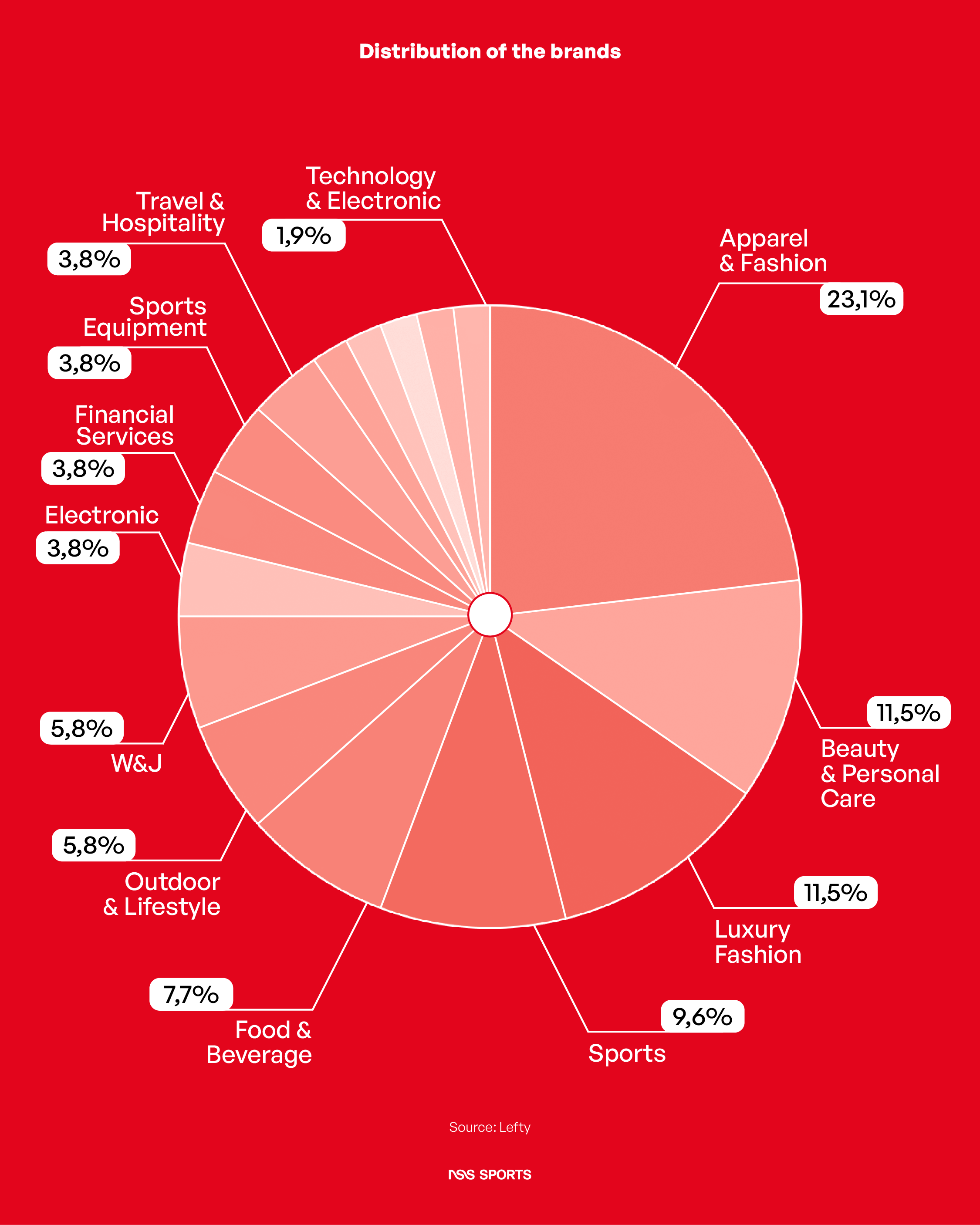
Shifting focus to the brands, the data confirms what many sensed ahead of the Games: fashion and luxury felt right at home at Milano Cortina 2026. Of the 52 brands associated with medal-winning athletes, 12 belonged to the Apparel & Fashion sector and six to Luxury Fashion. It was also an edition defined by technology, with the highest EMV values generated by Google—thanks to the media exposure driven by Ilia Malinin and Amber Glenn—and Samsung, a worldwide partner of the Games and supporter of a 40-athlete Italian roster through Team Samsung Galaxy.
Milano Cortina 2026 was a triumph both in sporting and commercial terms. Inevitably, the conversation will now turn to legacy — to infrastructure that may be repurposed or, conversely, risk falling into disuse. For the athletes, however, one thing is certain: they have built up a new social capital that can be used for commercial purposes. For brands, these Winter Games have revealed a new generation of ambassadors ready to redefine the way sport and brands interact. And we’ll be there to cover it.